Goa Offshore Vessels: Mandovi River Safety
The Mandovi River is not a casino floor, but the risk math running through its offshore vessel traffic is every bit as brutal as a high-variance slot grid. Anyone treating Goa's riverine gambling circuit as a soft, low-stakes environment is already mispricing their exposure before the first hull clears the Panaji jetty. The safety architecture around offshore casino vessels operating on the Mandovi is a hardware-and-human-failure problem, and the failure modes stack far worse than the house edge.
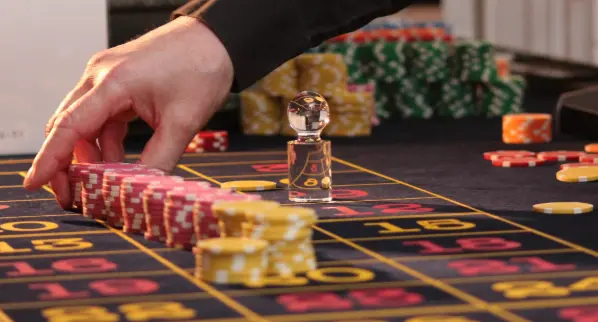
The Floating Casino Compliance Trap
Offshore casino vessels on the Mandovi sit in a regulatory gray zone that most operators quietly prefer. These are not standard passenger ferries, yet they inherit ferry-grade structural codes while carrying casino-grade foot traffic and nightlife loads. The audit reality: hull stability calculations built for daytime commuter decks get stretched to accommodate gaming floors, buffets, and high-density entertainment zones. That mismatch is a latent defect, not an operational inconvenience. When you audit offshore vessel safety compliance on the Mandovi, the first thing you pull is the load distribution manifest against the actual licensed passenger ceiling. The delta between the two is where incidents gestate.
🌊 Captains and marine surveyors who've worked this waterway will tell you the river's tidal surge and monsoon runoff create hull-stress profiles that differ sharply from open-sea conditions. A vessel rated for coastal cruising is not automatically rated for repeated mooring loads against a riverbank casino pontoon during peak festival traffic. That distinction gets buried in paperwork more often than anyone admits.
Mandovi River Traffic Density and Collision Risk
Traffic density on the Mandovi during peak tourist season is the silent multiplier. You have casino vessels, passenger ferries, fishing boats, and private craft all negotiating a channel that narrows unpredictably with shifting sandbars. Collision risk here isn't theoretical; it's a statistical certainty waiting for a scheduling gap. Operators who run casino vessels without redundant navigational watch protocols are running a negative-EV safety model. The river doesn't forgive sloppy berthing windows.

🧠 The technical fix is boring but non-negotiable: mandatory AIS transponder redundancy, hard-capped passenger manifests enforced at the gangway, and independent stability verification before every licensed departure. Any operator skipping the pre-departure stability check on a Mandovi River casino vessel is gambling with the one variable they cannot hedge—structural integrity under live load. The math on that bet is worse than any table game on board.
Hardware and Life-Saving System Failures
Life-saving appliance audits on offshore casino vessels routinely expose the same failure class: equipment certified for passenger ferry duty but never stress-tested for nightlife occupancy patterns. Evacuation routes designed for orderly ferry disembarkation collapse under the chaos of a gaming-floor crowd at 2 AM. The fix requires treating evacuation modeling as a live-load simulation, not a static compliance checkbox. 🛠️ Every offshore vessel operating on the Mandovi needs a crowd-flow evacuation study specific to its gaming configuration, not a generic marine safety certificate rubber-stamped from a template.
Fire suppression on these vessels is another weak point. Casino floors carry electrical load densities—slot banks, lighting rigs, kitchen equipment—that exceed what standard ferry fire-suppression systems anticipate. The suppression capacity must be recalculated against actual gaming-floor power draw. Operators who treat that as an afterthought are building a floating ignition risk with a passenger manifest attached.
The Bottom Line on River Safety Math
Mandovi offshore vessel safety is a compounding-risk problem where regulatory gaps, traffic density, and hardware mismatches all correlate. The operators who survive the audit cycle are the ones running redundant watch protocols, hard passenger caps, and stability verification before every single departure. The vessel that clears the jetty without that checklist is not lucky—it is unhedged, and the river keeps a precise ledger of unhedged positions.