Sic Bo Triple Bet Frequency: The Brutal Math Behind Dice Streak Odds
Every Sic Bo player who has ever chased a triple has felt the sting of the house edge, but the real question is whether the frequency of triple outcomes follows a predictable pattern that can be exploited for streak betting. The short answer is yes, but the margin is razor-thin and the variance will eat most bankrolls alive.
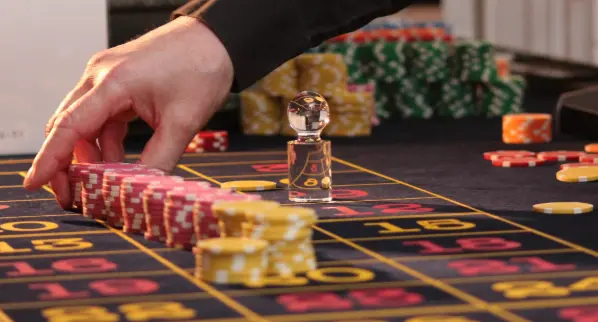
Sic Bo uses three standard six-sided dice, which means there are exactly 216 possible outcomes per roll. The probability of any specific triple, such as three fours, is 1 in 216, or roughly 0.463%. The probability of any triple at all, meaning three ones through three sixes, is 6 in 216, which reduces to 1 in 36, or approximately 2.778%. These numbers are absolute and do not change based on previous rolls, but the frequency distribution over large sample sizes is where things get interesting for streak predictors.
Why Triple Frequency Feels Higher Than It Actually Is
Casino floors are designed to amplify the memory of rare events. When a triple hits, the payout is typically 180 to 1 on a specific triple or 30 to 1 on any triple, and the celebration sticks in the mind. But the cold reality is that Sic Bo Triple Bet Frequency remains locked at 2.778% for any triple across millions of rolls. The standard deviation for triple appearance in a 1,000-roll session is around 5.2 occurrences, meaning you could see anywhere from 15 to 40 triples in a long session without the underlying probability shifting at all. 🎲

Streak prediction models that rely on hot and cold dice are statistically bankrupt. The dice have no memory, and the physical wear on casino dice is negligible over thousands of rolls. However, the human brain is pattern-matching software that sees streaks where only randomness exists. This cognitive bias is exactly what the house leverages to keep triple bettors coming back.
The Real Edge in Triple Streak Tracking
If you are going to track Dice Streak Odds for triple bets, you need to understand that the only exploitable angle is in the payout structure versus the true odds. A specific triple pays 180 to 1 in most jurisdictions, but the true odds are 215 to 1. That gap is the house edge, and no amount of streak analysis can close it. The any triple bet pays 30 to 1 against true odds of 35 to 1, which is a slightly better proposition but still a losing game over time.
Advanced players sometimes combine triple tracking with combination bets to create a synthetic hedge. For example, betting on a specific triple while simultaneously betting on the three two-dice combinations that do not include that number can reduce variance, but it also reduces the payout to the point where the house edge becomes even more punishing. ❄️
Hardware Reality and Dice Uniformity
Modern casino dice are precision-machined to tolerances of 0.0001 inches, and the pips are filled with material of the same density as the die body. This means that for all practical purposes, every face has an equal probability of landing up. Any deviation from uniform distribution is so small that it would require millions of rolls to detect, and no streak prediction system can identify it in real time. The frequency of triples is a fixed constant, not a variable to be modeled.
Some underground operations use worn dice or weighted dice, but those are criminal operations, not legitimate gaming floors. In a regulated environment, the Triple Bet Frequency is as reliable as the sunrise. Your only real decision is whether the entertainment value of chasing a 180 to 1 payout is worth the mathematical certainty of a 2.778% house edge on any triple bet. 🎰
The streak odds for triples over any finite number of rolls can be calculated using the binomial distribution, but the results will always show that the expected number of triples converges to 2.778% of total rolls. There is no predictive model that changes this fundamental fact. The dice do not care about your tracking spreadsheet.