The Rise of Automation in Live Dealer Environments
The integration of robotics into the live dealer sector represents a seismic shift in how players interact with table games. 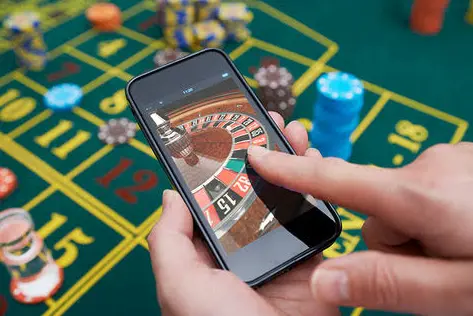 This isn't merely about digitizing a deck of cards; it is about engineering a physical presence that operates with mathematical precision. For high-stakes players and casino operators alike, the Live Casino Dealer Robot is not a gimmick but a sophisticated convergence of mechanical engineering, low-latency streaming protocols, and random number generation (RNG) auditing. Understanding the mechanics behind these units is essential for anyone looking to exploit the nuances of automated versus human-dealt tables.
Core Technological Architecture and Operational Mechanics
At the heart of any automated dealing system lies a complex array of actuators, optical sensors, and magnetic card shoe readers. Unlike a standard live stream where a human croupier manually shuffles and deals, a robotic arm or a multi-axis gantry system executes these tasks with sub-millimeter accuracy. 🎲 The Live Casino Dealer Robot utilizes computer vision to identify card values instantaneously upon extraction, relaying that data to the game engine faster than any human eye could perceive. This eliminates the risk of dealer misreads or "palming" errors, providing a sterile, albeit mechanical, transparency. For the player, this means the house edge is calculated purely on probability, removing the psychological tells of human dealers.
Latency, Fairness, and the Regulatory Landscape
Critics often question the fairness of automated systems, but regulatory bodies like the Malta Gaming Authority (MGA) and the UK Gambling Commission (UKGC) have established rigorous certification standards for these machines.  The operational integrity hinges on the synchronization between the physical card dispensing unit and the optical character recognition (OCR) software. A delay in the video feed or a misalignment in the robotic gripper can lead to voided bets or disputes. Consequently, top-tier operators deploy redundant sensor arrays and failover servers. The Live Casino Dealer Robot must undergo rigorous penetration testing and RNG certification to ensure that the mechanical shuffle produces a truly random permutation, indistinguishable from a manual wash.
Strategic Advantages for High-Volume Players
For the seasoned bettor, the primary allure of robotic dealers is the absence of fatigue and human error. 🃏 A human dealer rotating a shoe for eight hours may experience a slight variation in dealing speed or card placement. A robotic unit, however, maintains a constant velocity and trajectory, creating a perfectly uniform game state. This consistency allows for the application of advanced betting systems—such as Martingale or D'Alembert—with fewer variables to consider. Furthermore, the automated nature ensures that the "burn card" procedure is executed flawlessly every time, adhering strictly to the casino's variance protocol without emotional deviation.
The Future of Hybrid Gaming Floors
The trajectory of this technology points toward a hybrid model where physical casinos utilize robotic dealers during off-peak hours to reduce labor costs while maintaining a live-action feel. 🎰 The next generation of these units is expected to incorporate AI-driven natural language processing, allowing the robot to interact with players via pre-recorded or synthesized voice responses, bridging the gap between cold machinery and the warmth of a traditional pit boss. As bandwidth increases and 5G becomes ubiquitous, the distinction between a dealer in Macau and a server in Dublin will blur completely, with the robotic interface serving as the ultimate neutral arbiter of the game.